Cosmetics sold throughout the European Economic Area need CE certification, and this includes products like eyeliner. The requirement comes from EU regulations specifically EC No 1223/2009, a set of rules designed to protect consumers by setting strict health and environmental standards. Companies selling without proper CE markings risk getting their products pulled off shelves right away, plus facing fines that can go well over half a million euros for each infraction. When manufacturers get certified, it means their eyeliner products have gone through thorough safety checks. These tests look at things like whether there are dangerous levels of heavy metals or other banned ingredients present. They also check how stable the product remains when exposed to different temperatures and storage conditions. Microbiological testing ensures nothing harmful grows in the product over time, which helps keep customers safe from contamination risks.
Non-compliant manufacturers risk permanent exclusion from the “80 billion European cosmetics market”. Beyond legal requirements, CE marking builds consumer trust: 72% of EU buyers actively verify certification before purchasing beauty products. For eyeliner producers, this dual function—ensuring market access while reinforcing credibility—makes CE compliance non - negotiable.
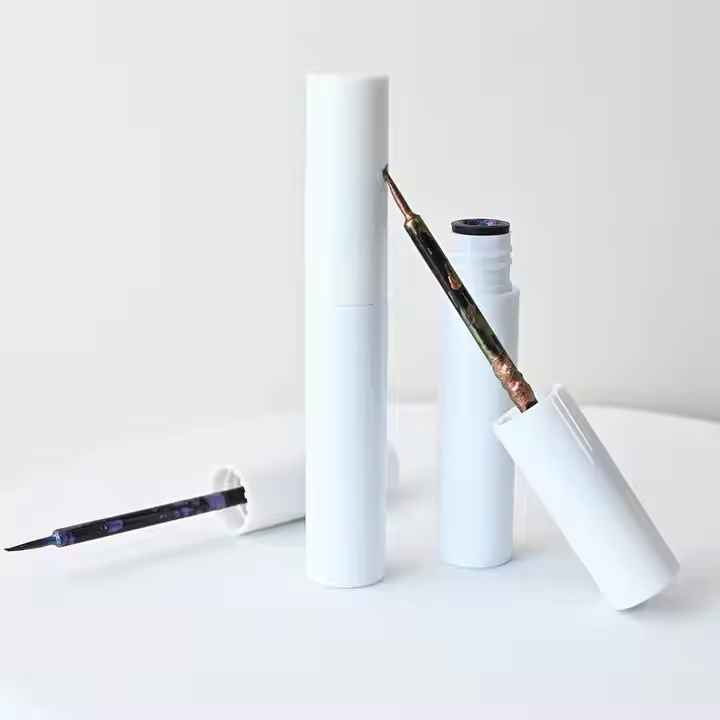
First thing to check is whether the eyeliner product fits within the scope of Cosmetic Products Regulation (EC) No 1223/2009, which remains the only official set of rules for cosmetics across the European Union. To meet these standards, companies need to create what's called a Cosmetic Product Safety Report (CPSR), and this has to come from someone who actually knows what they're doing in terms of safety assessment. The report itself needs detailed analysis of every ingredient against two specific lists: Annex II covers substances that are completely banned, while Annex III lists those that can only be used under certain restrictions. When looking at common pigments found in most eyeliners like iron oxides (CI 77499), manufacturers should double check their concentrations against new limits established by Regulation (EU) 2023/1545. And don't forget about batch testing either. Products need to undergo stability tests where samples are kept at around 40 degrees Celsius and 75% relative humidity for three months straight. This helps ensure there won't be any microbial issues down the line, following guidelines outlined in ISO 29621:2017 standard.
Compile a complete technical dossier containing:
The Annex I CPSR must specifically include:
Manufacturers who reduce documentation errors by 70% typically achieve approval in as little as six weeks.
Getting eyeliner products compliant involves balancing three major chemical regulations: REACH, which stands for Registration, Evaluation, Authorisation and Restriction of Chemicals; CLP covering Classification, Labelling and Packaging; plus the CE mark. The REACH regulation puts limits on dangerous stuff such as lead and arsenic that can be found in makeup and are connected to real health problems. Then there's CLP, which insists that all packaging has clear warning signs and proper labels so consumers know what they're dealing with. And finally, the CE certification acts as proof that the product is safe after going through tests looking at toxicity levels and compiling safety reports. These requirements ensure that what goes into our eyes meets strict safety standards across Europe.
| Regulation | Key Focus | Eyeliner Impact |
|---|---|---|
| REACH | Substance restrictions | Bans carcinogens, mutagens, and reproductive toxins |
| CLP | Hazard communication | Requires precise, standardized labeling of chemical hazards |
| CE | Product safety | Mandates full safety assessment and technical documentation |
Putting everything together makes compliance easier in practice. When companies gather REACH data, it naturally feeds into how they classify products under CLP regulations and helps support their CE safety evaluations. Take phthalate replacement as a case in point. Switching these chemicals out for options approved under REACH actually makes hazard labels simpler to manage according to CLP rules. Plus, there's less backtracking when it comes to doing those expensive toxicological tests again during CE assessment processes. Businesses that have embraced this kind of coordination report saving around 30 percent on retesting expenses. They also face far fewer product recalls down the line. These savings matter a lot when trying to get products onto shelves across Europe without delays.
Delays in Conformit© Europ©enne (CE) certification can postpone eyeliner market entry by four to six months, directly affecting revenue and competitive positioning. Strategic preparation accelerates regulatory workflows without compromising rigor.
Using pigments and binders that have already been validated and listed in the Cosmetic Products Notification Portal (CPNP) means companies don't have to repeat unnecessary toxicity tests. At the same time, having qualified safety assessors working inside the company really cuts down on how long it takes to get all the paperwork done. The people who work on these reports internally tend to finish Annex I documents about 40% quicker compared to outside consultants because they know the company's specific formulations and can reference previous safety assessments they've worked on. When businesses combine these approaches, getting products certified across Europe often takes less than two months for items that meet all regulatory requirements. This kind of efficiency makes it much easier to bring new cosmetics to market quickly while still following EU regulations.
Be the first to get our latest styles and offers.
Room 501, No. 279-6, Dabutou Village, Songyuansha Community, Guanhu Street, Longhua District, Shenzhen, China
Copyright © 2026 Shenzhen Joyo Cosmetics Co., Ltd. All rights reservedPrivacy policy
 EN
EN
 AR
AR FR
FR DE
DE IT
IT PT
PT RU
RU ES
ES IW
IW VI
VI TH
TH TR
TR MS
MS